
Digital out-of-home used to be planned screen by screen, booked through separate media owners and changed only after another round of emails. Programmatic buying makes the channel faster and more flexible, but it does not turn a public billboard into a giant web banner.
The screen still has a fixed location, a real audience moving around it and creative rules set by the media owner. What changes is the buying layer. Advertisers can use software to select eligible screens, apply time and context signals, bid for available plays and connect exposure data with wider campaign measurement.
Quick answer: Programmatic DOOH, or pDOOH, is the automated purchase of advertising on connected public screens. A DSP evaluates available screen inventory against location, audience, time and contextual rules, then buys eligible ad plays through an auction or programmatic deal. Each play can represent multiple estimated viewers, so planning and measurement differ from one-to-one digital impressions.
What is programmatic DOOH advertising?
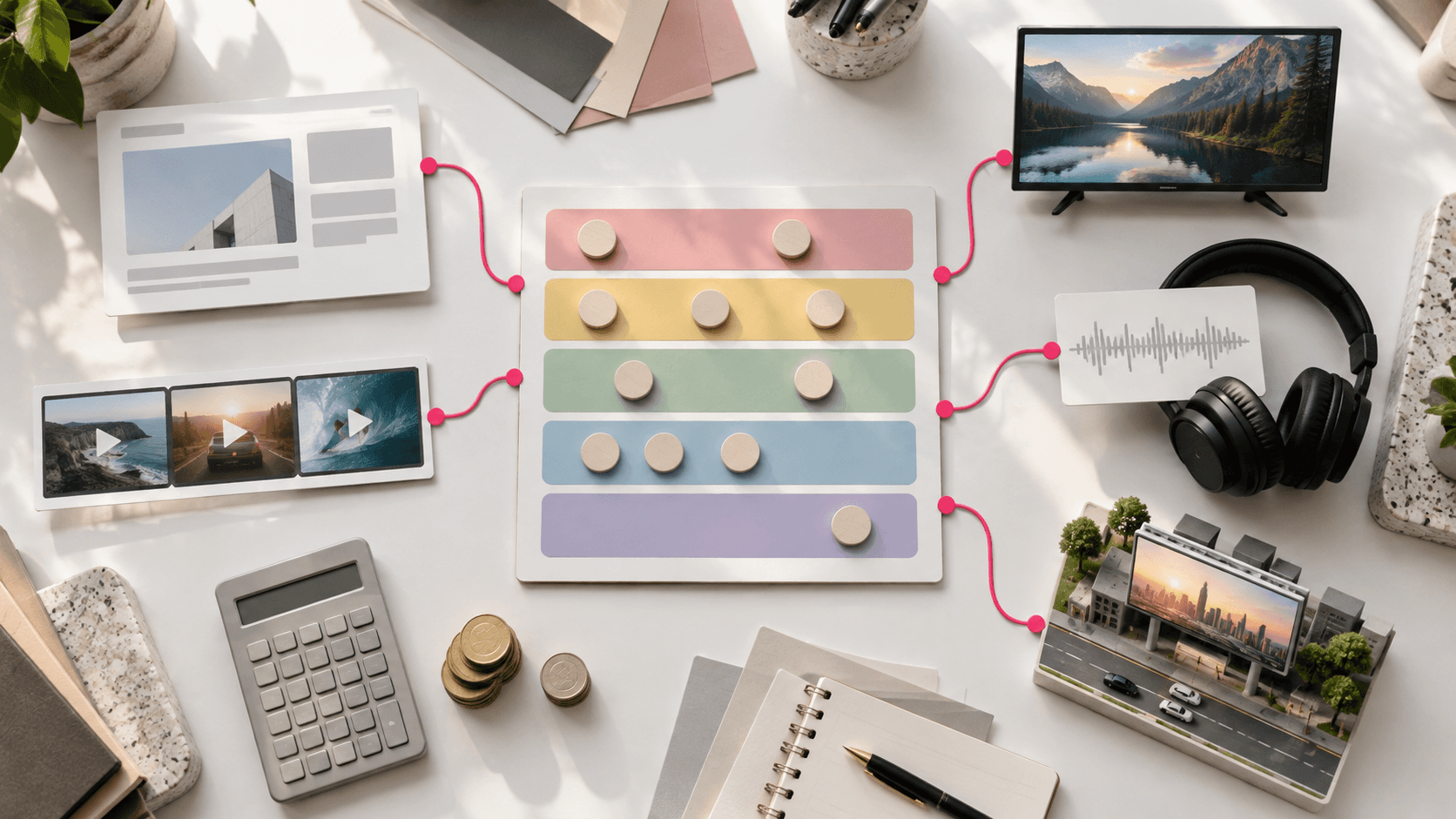
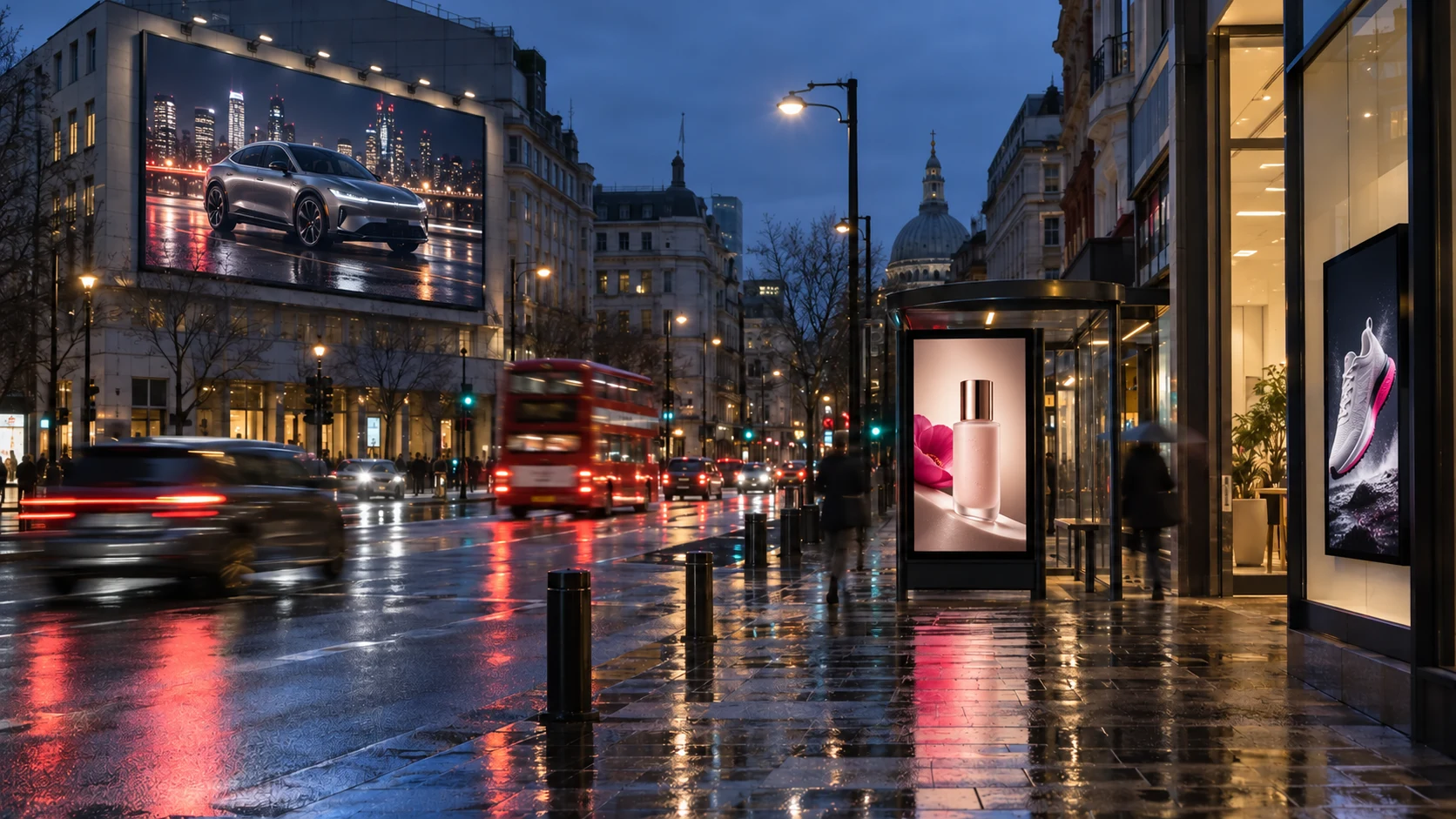
Programmatic digital out-of-home advertising is the automated buying of ads on connected screens in public places. Inventory can include roadside billboards, transit displays, airport panels, shopping-centre screens, retail displays, gym screens, office-building networks, petrol-station screens and street furniture.
The core idea is simple: media owners make eligible screen inventory available through supply platforms, while advertisers use a demand-side platform, or DSP, to plan and buy it. Google documents this workflow for Display & Video 360 in its guide to purchasing digital out-of-home inventory. The platform can use real-time bidding to scale delivery, while reporting distinguishes an ad play from the publisher's estimated audience impressions.
That distinction matters. One creative play on a roadside screen may be visible to several people, while a small venue screen may have fewer than one modelled impression per play at a given moment. IAB Tech Lab's DOOH implementation guidance for OpenRTB explains why the medium needs audience multipliers, screen-location data, different device attributes and longer approval or delivery windows than browser-based advertising.
Buying model | How inventory is bought | Best fit | Main trade-off |
|---|---|---|---|
Open auction | The DSP bids on eligible plays as they become available. | Flexible reach, testing and budget pacing. | Less certainty around a specific screen or volume. |
Private marketplace | Selected buyers access a publisher or network through a deal ID. | Curated supply, premium venues and stronger placement control. | Higher floors or narrower scale may apply. |
Programmatic Guaranteed | Price, volume and inventory are agreed in advance, then delivered through programmatic pipes. | Landmark screens, fixed periods and planned share of voice. | Less flexibility to shift budget after booking. |
Direct insertion order | The buyer contracts with the media owner outside a DSP. | Simple, fixed campaigns on known sites. | More manual coordination and limited cross-network optimization. |
How does programmatic DOOH work from brief to screen?
A pDOOH campaign usually begins with a business outcome, not a map of every available screen. The buyer defines who should be reached, where those people are likely to move, when the message is relevant and what evidence will count as success. The team then translates those decisions into supply, targeting, creative and measurement rules.
Programmatic DOOH buying process
Set the outcome.
Define awareness, store visits, event traffic, product launch or another measurable goal.Build the audience and geography.
Choose markets, venue types, proximity areas, time windows and allowed data signals.Select supply.
Use open-auction inventory, PMPs or guaranteed deals that match the brief.Map creative to screens.
Adapt duration, aspect ratio, resolution, file weight and message to every screen group.Approve and activate.
Send creative for publisher review, apply bids and pacing, then start eligible buying.Verify and learn.
Reconcile plays and audience impressions, then analyse reach, lift or visits against the campaign design.
The auction itself may be fast, but the whole workflow is not always real time. Screens can operate on private networks, creative often requires human approval and some systems pre-load content to protect playback. Build working days for creative approval and screen QA into the launch plan.
For a broader view of the software, exchanges and deal types around this process, read the complete programmatic advertising guide.
Which screen types can a pDOOH campaign use?
Screen type shapes audience behaviour, dwell time, creative detail and cost. A driver passing a large-format billboard may have only a few seconds to process the message. A traveller in an airport or a shopper near a retail display may have longer dwell time and a clearer opportunity to act.
Large-format roadside: High visibility and broad reach. Use one idea, very little copy and strong contrast.
Transit: Rail, underground, bus and shelter screens can reach commuters by route, station, time and local context.
Airport: Premium placements with long dwell time, business-travel relevance and strict creative specifications.
Retail and shopping centres: Useful near the point of sale, for store-visit strategies and for connecting media with product or category context.
Place-based networks: Gyms, offices, healthcare venues, universities, cinemas and hospitality spaces offer audience context tied to the venue.
Street furniture and kiosks: Smaller urban screens can support local coverage, directional messages and proximity-led campaigns.
Do not treat all screens as interchangeable inventory. Ask for the venue, exact screen dimensions, orientation, expected dwell time, loop length, sound policy, operating hours and audience methodology before approving the plan.
How can advertisers target and trigger pDOOH?
Programmatic DOOH usually targets contexts and audience concentrations rather than identifying an individual standing near a screen. The buying platform may use location, venue, time and aggregated mobility or publisher audience data to decide which plays are eligible.
Geography: Country, region, city, postcode, radius, point of interest or selected screen packages.
Venue and environment: Airports, retail, transit, roadside, offices, gyms or other place-based networks.
Daypart and day of week: Commuter periods, lunch, evening, weekends or campaign-specific windows.
Audience index: Screen groups selected because aggregated data indicates a higher concentration of the intended audience.
Contextual triggers: Weather, temperature, traffic, live scores, stock status or another approved data feed.
Event and proximity strategy: Screens around venues, stores or defined locations during relevant periods.
A trigger should improve relevance without making delivery too fragile. Use a default creative whenever a live feed is missing, define acceptable data latency and agree who owns the feed. If location targeting is part of a wider household video plan, compare its practical limits with CTV geofencing and household-level targeting.
What creative specifications should teams plan for?
There is no universal pDOOH file. Every media owner can define its own resolution, aspect ratio, duration, frame rate, file type, file weight, loop and approval rules. A campaign that spans roadside, portrait retail and transit screens may need several exports even when the core idea stays the same.
Start with a screen matrix. Group placements by physical context and technical specification, then map one approved asset to each group. Keep critical content away from the edges, avoid small disclaimers and test the design at realistic viewing distance. Many environments are silent, so video must work without audio.
Strong DOOH creative is usually fast to understand. Use a clear focal point, a short message and branding that can be recognised in motion. Dynamic creative can swap products, calls to action or contextual elements, but each variation may still require publisher approval. Do not assume unlimited live rotation after the campaign starts.
How is programmatic DOOH bought through a DSP?
The buying route depends on market, media owner, exchange integration and platform access. Buyers can use a multi-channel DSP such as Display & Video 360, a specialist DOOH platform or an agency partner that combines strategy, supply curation, activation and reporting.
Start by checking whether the preferred screens are available in the selected DSP, which sellers represent them and whether the deal is open auction, PMP or guaranteed. Then confirm which targeting controls and reporting dimensions actually work for that inventory. Platform features can differ by seller and market.
Brands that need hands-on support can use the Ad Geeks Out of Home solution to plan inventory, targeting, creative adaptation and measurement. Smaller teams should also compare managed and self-service operating models in the guide to programmatic services for small businesses.
What does programmatic DOOH cost?
pDOOH is usually traded on a CPM basis, but the denominator needs attention. Publishers may model how many people can see one ad play and report audience impressions using an impression multiplier. A low CPM is not automatically better if the screens, audience methodology or time periods are not comparable.
For early modelling, many pDOOH environments can begin around $3-$20+ CPM, before separate technology, data, verification, creative or service fees. This is a broad planning band, not a universal market average or rate card. Landmark sites, airports, premium retail, scarce audience packages and high-demand periods can cost materially more. The Ad Geeks 2026 CPM benchmark guide explains the methodology and fee layers behind that range.
The final price is shaped by screen type, market, venue quality, time of day, audience scarcity, deal type, campaign length, creative complexity, measurement scope and bid competition. Compare proposals on the same definition of impressions and ask whether the quote is gross or net and which platform or service fees are included.
How should pDOOH performance be measured?
Begin with delivery evidence. Confirm which creative played, on which screen, at what time and how many served plays or spots were recorded. Then separate served plays from audience impressions. Google notes that DV360 reports both, and that publisher impressions represent the publisher's estimated viewers for each ad.
Outcome measurement should match the objective:
Reach and frequency: Estimate how many people had an opportunity to see the campaign and how often.
Footfall or visitation lift: Compare visits among an exposed or modelled group with a suitable control. Document the location-data source, lookback window and minimum sample.
Brand lift: Use exposed versus control research to evaluate awareness, recall, consideration or intent.
Search or site response: Analyse branded search, direct traffic, QR interactions or landing-page activity while controlling for other media and seasonality.
Sales or conversion lift: Where privacy-safe matching is possible, compare outcomes against a control or expected baseline.
Do not present every post-exposure visit as caused by the ad. Agree the exposure logic, control design, attribution window and privacy rules before launch. OAAA's 2025 discussion of proposed OOH impression measurement guidelines also highlights the industry's move toward clearer, more consistent impression definitions for cross-channel planning.
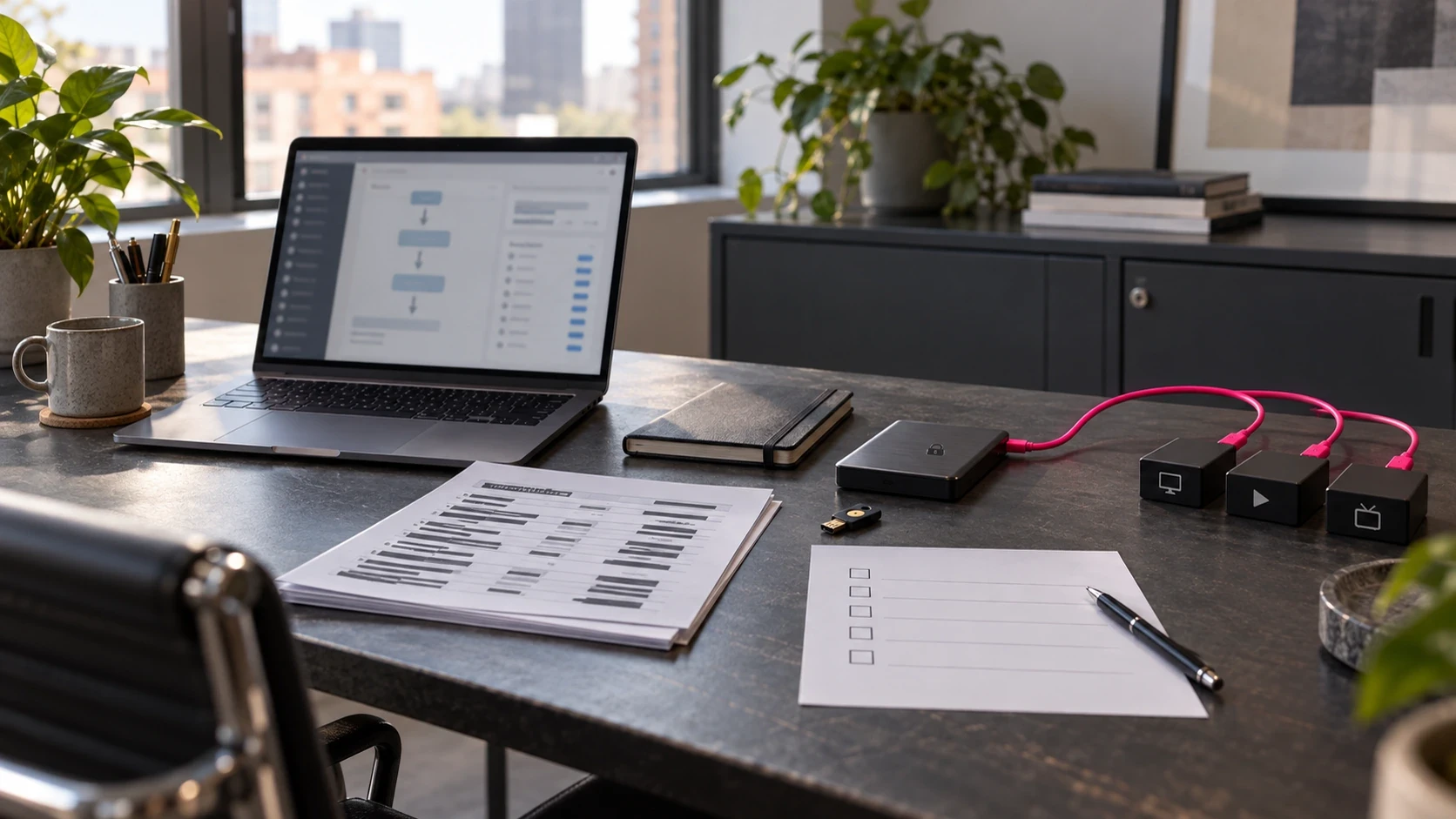
What should a programmatic DOOH launch checklist include?
Define one primary business outcome and the decision the campaign should inform.
Confirm markets, venue types, screen lists, operating hours and excluded locations.
Choose open auction, PMP, Programmatic Guaranteed or a deliberate mix.
Document the audience and impression methodology for every supply partner.
Agree dayparts, contextual triggers, default creative and data-feed ownership.
Create a screen matrix covering resolution, aspect ratio, duration, file type and weight.
Submit every asset for media-owner approval before the activation deadline.
Set bids, budget, pacing, frequency rules and deal floors by screen group.
Verify time zone, currency, campaign dates and local advertising restrictions.
Build reporting that separates served plays, publisher impressions, spend and CPM.
Lock the footfall, brand-lift or sales-lift design before delivery begins.
Run a first-day delivery and creative check, then reconcile publisher logs after the flight.
Policy is part of launch QA. Google, for example, documented new DOOH allowances for certain alcohol and gambling advertising in eligible jurisdictions in its Q2 2026 DV360 update. Availability does not remove the need to check local law, platform policy, publisher rules and required advertiser certification.
Frequently asked questions
Is programmatic DOOH the same as digital out-of-home?
No. DOOH describes ads shown on digital screens outside the home. Programmatic DOOH describes a buying method that uses software, data and automated deals or auctions to purchase eligible DOOH inventory.
Can programmatic DOOH be bought in real time?
Some inventory is bought through real-time bidding, but screen delivery can involve pre-loading, playlist rules and delayed proof-of-play data. Creative approval may also take working days.
What is the difference between an ad play and an impression?
An ad play records that the creative appeared on a screen. An audience impression estimates how many people could see that play, often using a publisher-supplied multiplier or audience methodology.
Can pDOOH use weather or live-data triggers?
Yes, where the DSP, publisher and creative workflow support them. Define the trigger, data source, refresh rate and default creative, then secure approval for every allowed variation.
Does programmatic DOOH target individual people?
Usually it targets screens, contexts and aggregated audience concentrations. Planning may use mobility or audience data, but a public-screen impression is not the same as serving a personal ad to one identified device.
What is a typical pDOOH CPM?
A broad early-planning band is around $3-$20+ CPM for many environments, but premium screens can be higher. Compare the same impression methodology and confirm all technology, data and service fees.
How long does a pDOOH campaign take to launch?
Simple campaigns may launch within days once supply, creative and tracking are ready. Multi-market campaigns, guaranteed deals, dynamic feeds and strict publisher approvals need a longer production and QA window.
Plan a programmatic DOOH campaign
The best pDOOH plan connects a clear audience and place strategy with approved creative, transparent impression definitions and measurement designed before launch. Start with the outcome, then choose the screens and buying route that can produce credible evidence.
Sources and verification
Google Display & Video 360, “Purchase digital out-of-home inventory.” Live help documentation, reviewed October 12, 2026.
IAB Tech Lab, “Digital Out of Home is Now Integrated Into OpenRTB.” Implementation guidance, reviewed October 12, 2026.
OAAA, “Three Things to Know About OAAA's Proposed Impression Measurement Guidelines.” Published in 2025, reviewed October 12, 2026.
Google Display & Video 360, “Coming soon: Display & Video 360 updates in Q2 2026.” Last updated May 22, 2026.